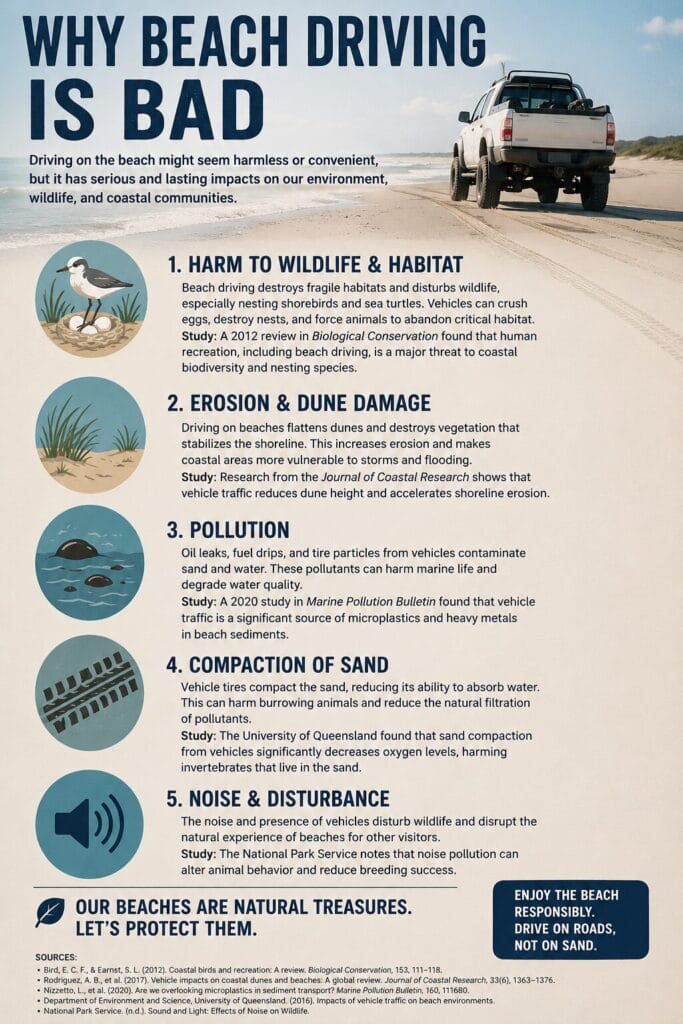
For many people, driving on the beach is a cherished tradition, making it easier to transport fishing gear, surfboards, and beach chairs. However, what may seem like harmless recreation can have lasting impacts on one of the world’s most fragile ecosystems.
Sandy beaches are far more than stretches of open sand—they are home to nesting sea turtles, shorebirds, ghost crabs, native dune plants, and countless microscopic organisms that keep coastal ecosystems healthy. Research consistently shows that off-road vehicles (ORVs) can damage these habitats in ways that take years or even decades to recover.
One of the greatest concerns is the impact on wildlife. Many shorebirds, including plovers, terns, and oystercatchers, nest directly on the sand, making their eggs and chicks difficult to spot. Vehicle traffic can destroy nests or repeatedly disturb birds, forcing them to abandon feeding and nesting areas. A study by the U.S. Geological Survey found that vehicle disturbance significantly reduced the number of migratory shorebirds using beaches and altered their natural behavior.
Beach driving also threatens sea turtles. Tire ruts can trap hatchlings trying to reach the ocean, while compacted sand can make nesting more difficult. The U.S. Geological Survey is currently studying how beach compaction affects sea turtle nesting success and shorebird habitat, highlighting the importance of maintaining natural beach conditions.
The damage doesn’t stop with wildlife. Dune vegetation—which stabilizes sand, reduces erosion, and protects coastal communities from storms—is especially vulnerable to vehicles. A 2025 global meta-analysis reviewing hundreds of studies found that off-road vehicles significantly reduce plant cover, biomass, diversity, and productivity. The researchers concluded that even a small amount of vehicle traffic can cause long-lasting ecological damage, with no truly “safe” level of recreational driving identified.
In addition, research at Assateague Island and Padre Island National Seashores found that beach driving alters dune formation and lowers dune elevations, making beaches more susceptible to erosion, storm surge, and overwash during hurricanes.
Fortunately, there are better ways to enjoy our coast. Walking, biking, or using designated beach access points protects wildlife while allowing everyone to experience the beauty of our beaches. By limiting vehicles on the sand, we can preserve nesting habitat, strengthen our dunes, and ensure that future generations inherit healthy, thriving coastlines.
Diya Comar
References
- Schlacher, T. A., et al. (2025). Adverse impacts of off-road vehicles on coastal dune vegetation are widespread, substantial, and long-lasting: Evidence from a global meta-analysis of sandy beach-dune systems. Estuarine, Coastal and Shelf Science.
- Schlacher, T. A., et al. (2013). Impacts of driving on the beach: Case studies from Assateague Island and Padre Island National Seashores. Ocean & Coastal Management.
- Tarr, N., Simons, T., & Pollock, K. (2010). An experimental assessment of vehicle disturbance effects on migratory shorebirds. Journal of Wildlife Management.
- U.S. Geological Survey. Beach Compaction and the Impacts of Tilling on Nesting Sea Turtles and Foraging Shorebirds