As summer continues in Jacksonville, protecting the wildlife that depends on our beaches has become increasingly important. One of the biggest environmental stories along Northeast Florida’s coast this year is the continued effort to protect sea turtles and their nesting habitats.
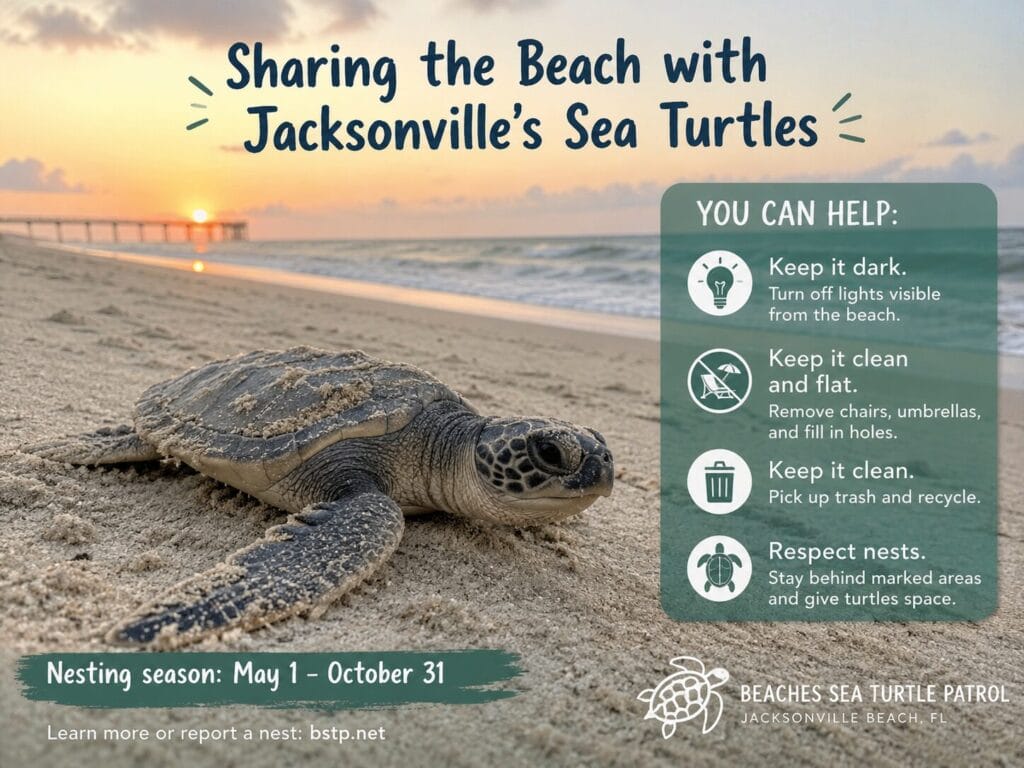
Sea turtle nesting season runs from May 1 through October 31, turning Jacksonville-area beaches into important nesting grounds. As of July 13, 2026, the Beaches Sea Turtle Patrol reported 94 loggerhead nests, along with one green sea turtle nest and two leatherback nests on the local beaches it monitors. The organization encourages beachgoers to keep beaches “clean, dark, and flat” by removing trash and beach equipment, reducing artificial light at night, and filling in holes in the sand that can become obstacles for turtles and hatchlings.
Local conservation efforts are also expanding. In May, Jacksonville University announced a new Turtle Research and Conservation Initiative that brings together several programs focused on protecting turtles throughout Northeast Florida. The initiative addresses threats including habitat loss, nest predation, and increasing coastal development.
These efforts come at an important time for Jacksonville’s coastal environment. Sea turtles face challenges from artificial lighting, marine debris, habitat changes, and other human activities. Protecting them requires more than the work of scientists and conservation organizations—it also depends on the everyday actions of people who visit and live near the beach.
For Jacksonville residents, simple choices can make a difference. Picking up trash, turning off unnecessary beachfront lights, removing chairs and umbrellas at night, and respecting marked nests all help make our coastline safer.
Jacksonville’s beaches are more than places for recreation. They are living ecosystems, and protecting the wildlife that calls them home is an important part of preserving our coast for generations to come.
Diya Comar