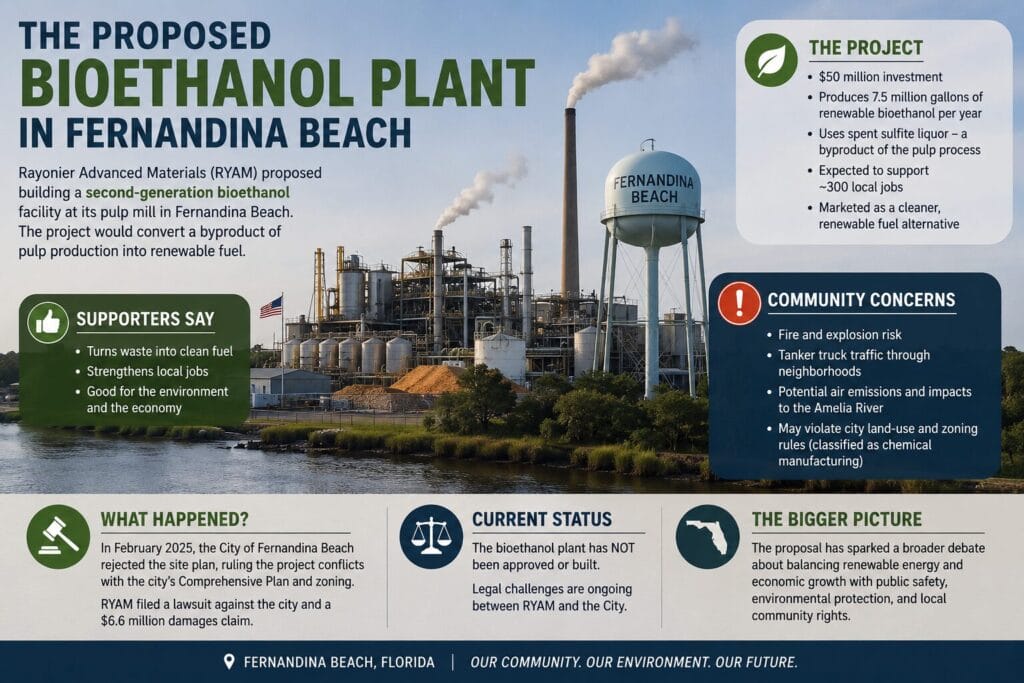
A proposed bioethanol plant at the Rayonier Advanced Materials (RYAM) mill in Fernandina Beach has become one of the community’s most debated environmental and economic issues. While supporters see the project as an innovative step toward renewable energy, many residents and local officials question whether the facility is appropriate for its proposed location.
The project would convert wood-based byproducts from the existing pulp mill into second-generation bioethanol, a renewable fuel that can help reduce reliance on fossil fuels and support the production of sustainable aviation fuel. RYAM argues that the facility would make better use of existing resources, reduce industrial waste, and help secure the future of the mill and the hundreds of jobs it provides.
Opponents, however, believe the issue extends far beyond renewable energy. Residents have raised concerns about potential increases in air emissions, odors, traffic, and the cumulative environmental impacts on a community that already hosts a large industrial facility. Many also argue that the proposed operation represents chemical manufacturing, which they say is inconsistent with the city’s land-use regulations and long-term vision for Fernandina Beach.
The controversy has also highlighted the challenge of balancing environmental progress with community protection. Renewable fuels play an important role in reducing greenhouse gas emissions, but many believe new industrial facilities should be carefully evaluated to ensure they do not negatively affect nearby neighborhoods, public health, or sensitive natural resources.
The debate ultimately reflects a broader question facing communities across the country: How can society transition to cleaner energy while protecting the places where people live, work, and recreate? As legal proceedings and regulatory reviews continue, the outcome in Fernandina Beach could influence how similar renewable energy projects are evaluated in Florida and beyond. Regardless of the final decision, the discussion underscores the importance of transparency, public engagement, and thoughtful planning when balancing economic development with environmental stewardship
Diya Comar